
Neighborhood guide
Ostend (the east end)
The Ostend has changed more than any other Frankfurt district. Once the city's working-class quarter around the docks and the wholesale market hall, it is now the address of the European Central Bank and a steadily rising number of new apartments.

About 29,000 people live in the Ostend on roughly 2.5 square miles, densely enough that housing is a permanent political problem here. The district has no separate history of its own; its story is Frankfurt's. What it does have is the sharpest transformation of any part of the city. In the 19th century the eastern outskirts became the workers' quarter, especially between the Osthafen docks and the Großmarkthalle wholesale hall, where incomes lagged far behind the Nordend and the Westend.
The European Central Bank building went up on the Großmarkthalle site, which the ECB secured in 2002 and took over three years later, and the district has been rising ever since. New rental and owner-occupied apartments cluster around the Ostbahnhof, and the residential area by the Ostpark has become genuinely desirable. Old industrial land in the eastern half is still being rezoned, which keeps the neighborhood in a productive state of half-finish.
The Hafenpark opened in the shadow of the ECB in 2012. Critics called it a jungle of concrete; skaters and BMX riders disagreed, and the park has been busy since day one. Basketball and multipurpose courts followed six months after opening, along with fitness equipment aimed at adults and older residents, a large play area and a climbing course. The Wiesenband meadow strip at the southern end is the place to lie down afterward, and the terrace of the Oosten by the old harbor crane has the view.
The Ostpark is the other green anchor, 79 acres of it, which makes it one of the largest parks in the city. At its center is a ten-acre pond formed from a cut-off arm of the Main, ringed by open lawns that fill with joggers and sunbathers. Frankfurt Zoo, one of the oldest in Germany, also sits in this district.
Where to stay in Ostend
A reasonable base if your plans involve the zoo, the riverbank or the parks, and if you would rather have new-build comfort than Old Town atmosphere.
Getting there
The Ostend runs east of downtown along the north bank of the Main, past the Osthafen docks.
Live from Booking.com
Hotels in and around Ostend
Current rates and availability for properties within about a mile of the center of the quarter.
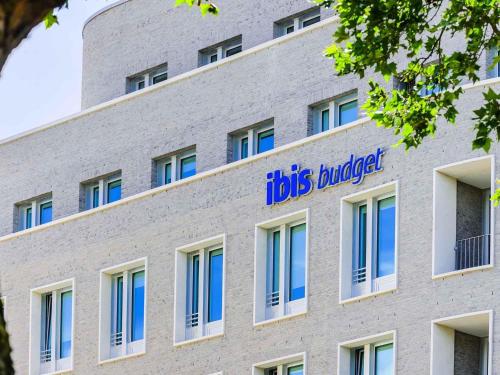
ibis budget Frankfurt City Ost
57 € / night

Motel One Frankfurt-East Side
63 € / night

MOXY Frankfurt East
66 € / night

Scandic Frankfurt Hafenpark
67 € / night
* Sponsored - booking is handled by Booking.com. As of: September 22, 2026. Prices and availability change daily.
Other Frankfurt neighborhoods
Historic core
Altstadt (the Old Town)
Frankfurt's medieval core around the Römerberg, rebuilt after the war and walkable to nearly every landmark.
Shopping
Innenstadt (downtown)
The Zeil shopping street, the Hauptwache and the skyscraper canyons of the banking district, all in one small central district.
Apple wine
Sachsenhausen (the south-bank quarter)
Across the Main: the Museumsufer museum row, the apple-wine taverns of Alt-Sachsenhausen and the best evening scene in the city.
Arrivals hub
Bahnhofsviertel (the station quarter)
The quarter around the main station: wide boulevards, skyscrapers, street food and a frank reputation. The most convenient landing spot if you arrive by train.
Upscale
Westend
Frankfurt's most expensive address: 19th-century villas, the Palmengarten botanical garden and the tallest towers in the city.
Nightlife
Bornheim
The lively village: Frankfurt's longest shopping street, a dense run of apple-wine taverns and the city's favorite place to live.
Plan the rest of the trip
Ready-made itineraries for one day, three days, a rainy afternoon or a layover at Frankfurt Airport, plus the landmarks worth building them around.