
Neighborhood guide
Bahnhofsviertel (the station quarter)
No Frankfurt district has a rougher reputation outside the city than the Bahnhofsviertel, and none is more misread. Behind the red-light streets and the drug history lies a lively, workaday quarter of Gründerzeit houses, small shops, skyscrapers and one of the prettiest parks on the river.
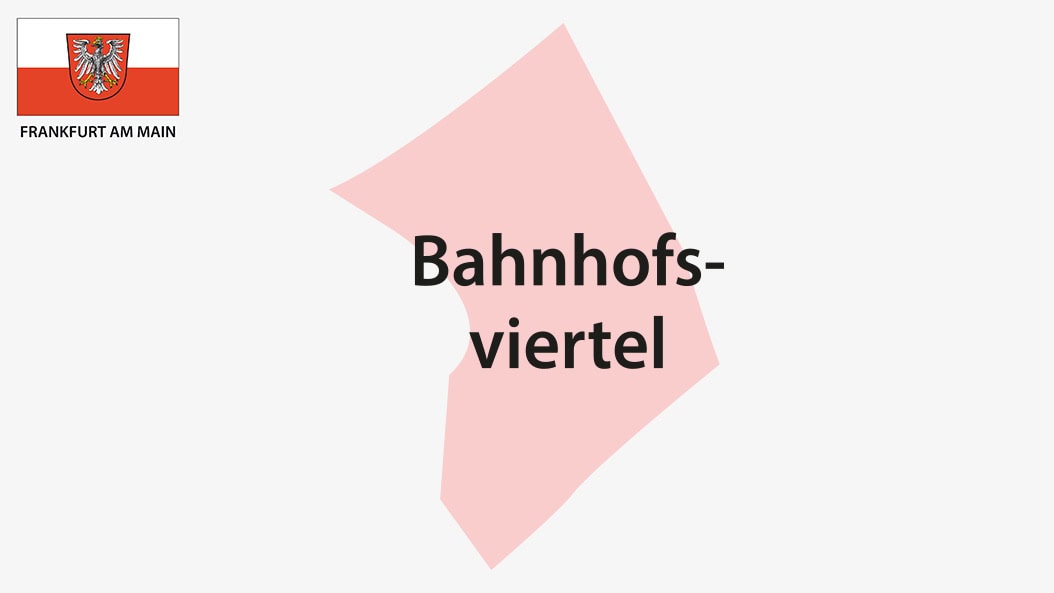
At about 0.2 square miles and roughly 3,800 residents, the Bahnhofsviertel is Frankfurt's second-smallest district after the Old Town. In the 19th century it was mostly empty land: a few farmsteads by the Main, some country houses of wealthy families, and the city gallows. Industrialization brought villas and gardens, the gallows disappeared, and when the Taunusbahn railway began running in 1839 Frankfurt got its first station. Broad boulevards such as the Taunusstraße and Kaiserstraße were laid out alongside narrower streets like the Elbestraße and the Moselstraße.
Because the quarter came through the war less damaged than most, nightlife took hold quickly during the American occupation. By the 1960s that had turned into a red-light district along the Elbestraße and the Niddastraße, and in the 1980s an open drug scene followed. Frankfurt answered with supervised consumption rooms and social services, and since the turn of the millennium drug users have largely disappeared from the streets. Prostitution and dealing have not gone away. Treat it as you would any big-city station district: it is fine by day, busier and edgier after dark.
What most visitors notice first are the wide boulevards, which still give the quarter a metropolitan feel, and the towers above them. The Silberturm stands on Jürgen-Ponto-Platz, the Gallileo on the Kaiserstraße reaches about 446 feet, and on the Taunusstraße the Skyper ensemble combines a roughly 502-foot tower with the neoclassical Skyper Villa from 1915 and the Skyper-Carré.
The quarter's quiet surprise sits on the riverbank. When a side arm of the Main silted up in 1860, the city gardener Sebastian Rinz planted a park there. The vegetation reminded Frankfurters of the Mediterranean, so they named it the Nizza, after Nice. It remains one of the most popular green spaces in the city. The Bahnhofsviertel is also Frankfurt's true melting pot, and nearly every religious community in the city has a place of worship somewhere in these few blocks.
Where to stay in Bahnhofsviertel
Stay here for convenience above all. Hotels sit within a few minutes of the platforms, which is worth a lot on a short business trip or a tight itinerary, and rates are often lower than in the Old Town.
Business hotels →Getting there
Frankfurt Hauptbahnhof (Central Station) sits at the western edge of the quarter, and downtown is a walk of roughly 15 minutes along the Kaiserstraße.
Live from Booking.com
Hotels in and around Bahnhofsviertel
Current rates and availability for properties within about a mile of the center of the quarter.
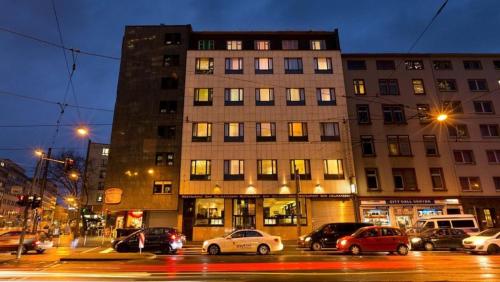
Hotel Lumière an der Messe by ANS
49 € / night
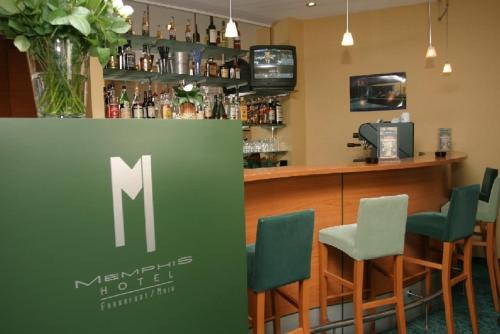
Memphis Hotel
50 € / night

Premier Inn Frankfurt Messe
61 € / night

IntercityHotel Frankfurt Hauptbahnhof Süd
62 € / night
* Sponsored - booking is handled by Booking.com. As of: September 22, 2026. Prices and availability change daily.
Other Frankfurt neighborhoods
Historic core
Altstadt (the Old Town)
Frankfurt's medieval core around the Römerberg, rebuilt after the war and walkable to nearly every landmark.
Shopping
Innenstadt (downtown)
The Zeil shopping street, the Hauptwache and the skyscraper canyons of the banking district, all in one small central district.
Apple wine
Sachsenhausen (the south-bank quarter)
Across the Main: the Museumsufer museum row, the apple-wine taverns of Alt-Sachsenhausen and the best evening scene in the city.
Upscale
Westend
Frankfurt's most expensive address: 19th-century villas, the Palmengarten botanical garden and the tallest towers in the city.
Nightlife
Bornheim
The lively village: Frankfurt's longest shopping street, a dense run of apple-wine taverns and the city's favorite place to live.
Residential
Nordend
The city's densest and most sought-after residential quarter: Gründerzeit apartment blocks, parks, cafés and no tourists.
Plan the rest of the trip
Ready-made itineraries for one day, three days, a rainy afternoon or a layover at Frankfurt Airport, plus the landmarks worth building them around.